now

Gaza One Year Later: A Tale of Two Eids

One year ago, the people of Gaza were in the middle of  Israel’s “Operation Protective Edge,” a 50-day assault that resulted in the deaths of over 2,100 Palestinians, including 551 children. This essay by Enas Fares Ghannam, a young writer in Gaza whom  I am mentoring as part of the We Are Not Numbers project, was written during Ramadan this year as she remembered the fear-filled Eid of the summer of 2014. 
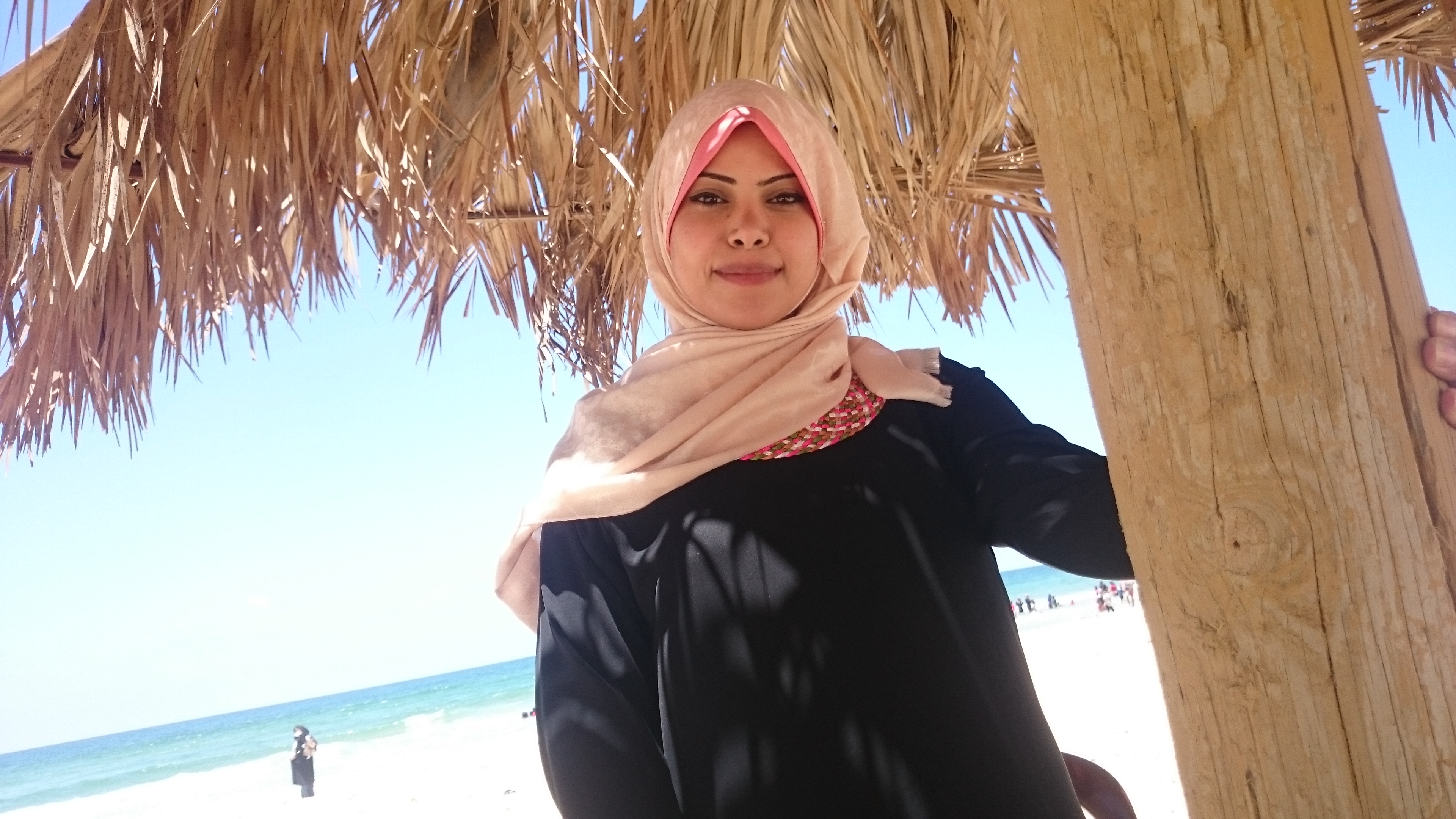
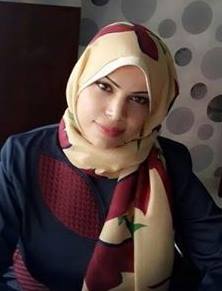
Enas Fares Ghannam in Gaza


It was the day of Eid; It was another day of war; It was a time to celebrate; It was a time to die; people were praying the Eid prayer; people were praying the funeral prayer; people were decorating their houses; people were evacuating their houses; we were all going directly to heaven; we were all going directly to living hell; it was time to despair; it was time to feel hope; children were playing in swings; children were dying in swings; people were visiting to wish happy Eid; people were visiting to wish mercy for the dead. Last year’s wartime Eid was entangled in my head with this year’s peacetime celebration

The war started during the month of Ramadan last year. Ramadan is the Muslim holy month when the Quran was revealed. We fast from sunrise to sunset for the sake of Allah. At the end of Ramadan we celebrate a Little Eid, which Allah gives to us as a reward for fasting during the Holy Month. Three months later we celebrate Big Eid, which follows the annual pilgrimage to Mecca in Saudi Arabia. This is when we sacrifice a goat for the sake of Allah.

*

I was in the kitchen in the middle of Ramadan last year, with my mother, preparing pizza and meat pies for Iftar, the time after sunset when we break our fast. The food looked delicious and smelled even better, especially because I was so hungry. There was an hour left until Iftar, so I went to my room, opened my laptop computer and started to follow the news about what had happened in Shujaya and the other places in Gaza.

Suddenly I heard a very loud explosion. White dust was everywhere, and I didn’t know what had happened.

My four brothers came and they were all screaming, “A missile hit the balcony. Get out right now.” One of my brothers went close to the balcony to make sure it had been hit, when another missile struck the same place. We all knew that we had to get out of there immediately. Everyone gathered on the ground floor; the children were in shock; no one said a word, but their white faces told everything about their feelings. While we were leaving a third missile hit the house. Our large family left in three cars, going different directions. Two brothers went to the homes of their respective in-laws. I was in the car with my third brother, his family and my parents. He was driving crazily, and I thought if we didn’t die from an airstrike we would definitely be killed in a car accident. We reached the house of my grandmother, which we thought would be safer, as the call for the prayer for Iftar rang out. We were all shaking involuntarily. I was trying to appear strong as we sat around my grandma’s table with the food she had prepared for her and grandpa that was now to be shared by us all, but my trembling hand holding the spoon exposed my true state. I suddenly remembered the meat pies sitting on our kitchen table, now either under a cloud of white dust and debris or entirely destroyed.

*

The little Eid of last year is still in my memory. I particularly remember when I woke up; I looked around; it was dark, no electricity, just a slight of light coming from the only window in the room. My father, mother and I were sleeping on mattresses. The day before wasn’t as joyful as last day of Ramadan usually is.

We are usually so excited to welcome the Eid. Together, with my mother, sisters, and sisters-in- law, we prepare the Eid cookies with dates. It’s part of our Eid that we serve Arabian coffee and these cookies to the guests. The night before the Eid I sit with my father and mother with loads of chocolate, toys and balloons before us, and prepare them for the children, so each one of them has a small plastic bag full of them.

*

After a week and a half staying with our relatives, I was in desperate need to go back home. I felt that I was being suffocated in this place with three families jammed together in a few rooms, the sound of explosions from afar, and the sad faces of the children. When I knew that I was going back to our home during the truce, which had just been declared, I felt like I was able to breathe again.

The roads were crowded; people were returning to their houses. Everyone was dressed in black or somber colors. I was wearing my black Abaya as well. I don’t usually wear black or an Abaya during Eid, but this time it was not possible to wear anything else; we were grieving for the dead. Without any discussion, we all dressed for mourning, feeling that wearing any other color would be a betrayal of the souls of the martyrs.

The moment I entered the house the telephone rang; I answered and heard the recorded voice of an Israeli soldier saying in broken Arabic, “Cooperate with us, you saw what happened in Shujaya and Khuzaa. Know that there is no safe place in Gaza for any of you.” My heart was beating violently.

I had heard before that people receive these calls. There are two kinds of calls, threatening ones like the one I received, and ones with a direct order to evacuate, which I feared to receive. I was shaking, listening for the word evacuation. I was imagining the situation, in seconds all kinds of scenarios passed through my head. How will we leave? Will we actually leave? Yes I guess. But how difficult it will be, to leave everything behind and go. What if anything happened to any one of my family? Then I recalled the faces of each one of them. I tried not to think of that. Can I take anything? Then I remembered how I barely had time to put on my hejab the time we fled the house because of the missile attack.

The voice stopped talking, and I hadn’t heard the order. I hung up the phone. I didn’t tell anyone about the call; I thought they would worry more, and I didn’t want to leave the house where we had all gathered during the truce for a family meal.

We were happy to see each other after a week-and-a-half separation, but we were afraid, too, that anything might happen or that the truce would be broken.

My nephew came and sat next to me, and then he asked me, “Auntie, what is the name of this Eid?”

“It’s the Little Eid,” I said.

He seemed suspicious.

Despite the horror we felt at the death and destruction all around us, I still remember the light in my heart at seeing them and sitting with them around the table for lunch, as though it were a normal Eid. In spite of little food, and the smell of the fear that controlled us while the drones buzzed over our heads, we were laughing from the heart. It had been many days since we had gathered at a table as a family.

Suddenly we heard explosions. On the radio we heard that children had been shelled when they were playing on a swing set in the beach refugee camp. Israel had broken the truce. There were bombs everywhere. We were afraid our home might be shelled again at any minute, so we hastily prepared to leave in our separate directions once more.

I was hugging everyone goodbye, and when I leaned down to embrace my nephew, he whispered in my ear, “You must be wrong. This is the big Eid; many people are being sacrificed.”


by Enas Fares Ghannam


This essay originally appeared on the site of the We Are Not Numbers Project.

Nancy Kricorian


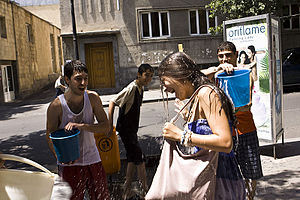
Vartavar, The Armenian Water Festival

Celebrating Vartavar in Yerevan


Vartavar (or Vardavar in its Eastern Armenian pronunciation) is a water festival that has been observed since pagan times and was adopted and adapted by Christianity. The day was originally dedicated to the pagan goddess Astghik, the goddess of water, love, and fertility. Its name comes from the roses (vart means rose in Armenian; var means go up or rise) that were offered to her during the celebration.


Vartavar is observed 98 days—or on the 14th Sunday—after Easter, and this year it falls on 13 July. The festival is celebrated on the streets of Yerevan where people use buckets, cups and even hoses to douse friends, family and complete strangers with water. It’s an opportunity for children to play pranks on grownups, and for everyone to cool down from the sweltering summer heat.


Nancy Kricorian


You too can receive this newsletter

Pie Chart by Nicola Griffith


Since a few months before the launch of All the Light There Was, I have been sending out a newsletter to friends, family, and interested readers. Below is my latest missive with instructions on how to sign up to receive the newsletter yourself.

5 Jun 2015

Dear Friends,

Well, I didn’t go to Book Expo America as planned. I was flattened by a virus and had to cancel pretty much everything for the week. I was sad to miss the event at the Republic of Armenia pavilion, and even sadder to miss a private dinner with Archipelago Books and translator Maureen Freely to celebrate the publication of Sait Fait’s A Useless Man: Selected Stories. While I was sick in bed, I read and loved the stories—the working class people, the scenes in and around Istanbul, and the humane, often melancholy, and yet sharp voice of the narrator.

For the past two months I have been enjoying Skype calls and email exchanges with a young Palestinian writer and translator in Gaza as part of a mentorship program called We Are Not Numbers. Please read the first harvest of our collaboration: Enas Fares Ghannam’s piece, FORCED: A Story from Gaza.

An article I wrote entitled “Choosing ‘Co-Resistance’ Rather Than ‘Turkish-Armenian Dialogue’” for the hard copy of Armenian Weekly’s April 2015 Armenian Genocide Magazine posted online last week.

And for those who are following the upcoming Turkish elections, you might find this amusing: Erdogan accused journalists, gays and Armenians as being ‘representatives of sedition’ through supporting the opposition, Kurdish-friendly HDP party. In The Nation, Maria Margaronis offers a good overview of the issues at stake in this election, along with some paragraphs about Armenian Genocide Centennial commemorative events in Istanbul.

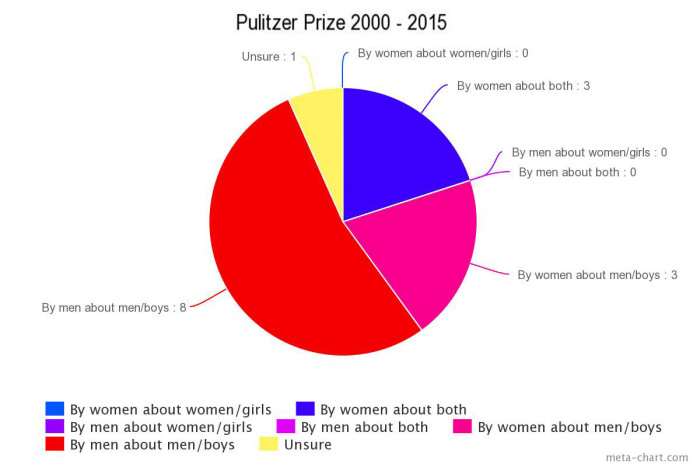
At the end of May a novelist named Nicola Griffith wrote an essay about the fact that books about women tend not to win big awards and a second piece on the topic that offered solutions. Nothing in the data Griffith collected was surprising (disheartening yes, surprising no), but the pie charts were great. The inimitable Ursula Le Guin also wrote an excellent piece entitled Up The Amazon about Amazon, books and capitalism that I highly recommend.

Thanks, as always, for your support and interest. Please feel free to forward to a friend. Anyone can sign up to receive this newsletter by sending a note to nkbookgroup@gmail.com.

Best,

Nancy Kricorian


A Story from Gaza by Enas Fares Ghannam

Under the aegis of We Are Not Numbers, I have been working as a mentor to a talented young Palestinian writer and translator based in Gaza. I’m thrilled to present the first harvest of our collaboration: Enas Fares Ghannam’s short fiction piece, Forced: A Story from Gaza, which was inspired by a true story.


Enas Fares Ghannam
Enas Fares Ghannam


Forced: A Story From Gaza


The three days of mourning ended. Ruba and her 4-year-old daughter Yasmin were staying with her in-laws after their own home was destroyed in the summer war. Ruba sat on the bed with Yasmin next to her, looking at the photo album from her wedding that she managed to rescue.

Ahmed, her husband, was a medic. During the summer assault on Gaza by Israel, he was rarely at home. He wasn’t at the house on the day she received a phone call from an Israeli soldier telling her she had only two minutes to evacuate the house. Ruba had quickly picked up her daughter and grabbed a few things—this album among them—and fled. Two minutes later the house was bombed. Two days later, she received the news that the ambulance her husband was in also was bombarded, and the blast had been so powerful it was hard to identify the bodies.

“And this is when we entered the wedding hall, “Ruba said to her daughter, pointing at a photo of the bride and groom. Ruba was wearing a white dress, while Ahmed held her arm and pressed her palm close to his heart.

For four months and 10 days she stayed at home with her parents-in-law for her Eda (the legally prescribed mourning period before a widow is allowed to remarry in Islam). Sad as she was, grieving and really unable to think of anything, others in the family had plans for her. Her sisters-in-law were always grumpy with her. Her parents-in-law talked most of the time with their three surviving sons, alone. She didn’t understand at first, but then it became clear when she heard them talking about Yasmin.

One afternoon when Ruba was within earshot, her mother-in-law said in a low voice to her husband, “How can we accept our granddaughter Yasmin living at someone else’s house? Ruba is young; she will marry one day for sure. Better she should marry one of our sons and stay in the family.” Ruba’s heart started to beat fast and she was afraid. She recalled the image of her sisters-in-law, sitting together in a corner whispering to each other, and looking worried during the mourning period. They were afraid of her; she would become a second wife to one of their husbands.

When Ruba decided to avoid the problem by returning to her family, her parents-in- law told her that she would have to leave Yasmin with them. So she stayed.

Muhammad, Ahmed’s younger brother, had been married to Dina for four years without children. Dina—the shy girl who barely spoke at the beginning of her marriage—had found comfort in the company of Ruba. In time, they became close friends, confiding almost everything to each other. Dina was afraid her husband would take another wife so he could have children, but Ruba kept telling her that Muhammad wouldn’t do that. As she nodded her head in agreement, Dina knew in her heart that his mother would one day convince him.

The mother-in-law decided that Muhammad and Ruba should get married for the sake of Yasmin. But Ruba, unable to betray her husband or to do such a thing to her friend, refused.

Ruba took Yasmin to visit her family and didn’t come back.

But Ruba didn’t have job or a provider. Her father was dead, and her brothers could hardly manage to provide for their own families. Her parents-in-law, trying to pressure her to marry Muhammad, didn’t offer any help or money for their granddaughter.

When Muhammad and his parents arrived at her parents’ house with a formal proposal, Ruba was confused. Muhammad was sitting on the same sofa that Ahmed had sat on six years earlier. She couldn’t help but compare the two brothers. Ahmed was lively and talkative. He made everyone laugh. His brother Muhammad was reserved. He didn’t talk unless someone asked him a direct question. It was his mother who brought up subjects to make him talk.

What about Dina? Ruba thought, as she imagined her friend crying. Ruba then remembered her own words to Dina: “Muhammad won’t do this to you.” Ruba felt angry at herself, at her helplessness and the bombing that had flattened her home and killed her husband, putting her in this terrible situation. “What if I could find a job?” she asked herself, with a glimmer of hope. “I could depend on myself. I wouldn’t need anyone to support me, and no one could tell me what to do.”

Yasmin gripped Ruba’s hand. Ruba looked at her daughter, who was so often isolated and lonely these days. There was no one to protect or defend the child anymore. Yasmin had stopped going out to play with the other children. She seemed older than her five years.

“Arrogance won’t do me or my daughter any good,” Ruba thought. “It’s better to be Muhammad’s wife than to marry anyone else.”

As if someone else was talking, as if someone else was thinking, Ruba said yes, feeling deep in her heart that she was making a big mistake, but not knowing what else to do.

Five months into her new marriage, Ruba was living with Dina, who barely talked to her except to argue. The door opened; Dina and Ruba, who walked slowly with her right hand on her back and the other on her growing belly, welcomed Muhammad. His face was white, and he was unable to speak, holding a paper in his hand

“What’s wrong?” Dina asked.

“We received a letter from an Israeli prison,” Muhammad whispered.

“Israeli prison?” asked Ruba. “Who do we know in there?”

Muhammad, looking into her eyes, said: “My brother Ahmed; he’s alive.”


By Enas Fares Ghannam


This story originally appeared on the web site We Are Not Numbers


Nancy Kricorian


Things Literary and Armenian

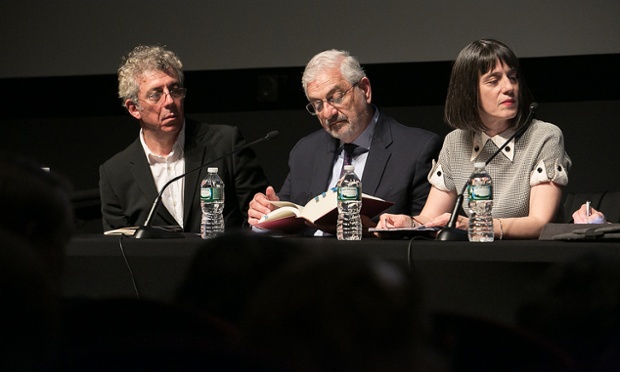
Eric Bogosian, Ronald Suny, and Nancy Kricorian at PEN World Voices Armenian Genocide Panel, 6 May 2015


On May 6, I participated in the PEN World Voices Festival Armenian Genocide: A Dark Paradigm panel along with Peter Balakian, Eric Bogosian, Maureen Freely, Robert Jay Lifton, Ron Suny, and Ragip Zarakoglu. The audio recording of the full session has been posted online.

If you live in New York, New Jersey or Boston you probably saw the super-obnoxious “happy butterfly” Armenian Genocide denial roadside billboards sponsored by a group calling itself “Fact Check Armenia.” This piece from Boston Magazine takes The Boston Globe to task for running the print ad on the same day that they called for genocide recognition in an editorial. There is also discussion of The New York Times’ refusal to run similar ads.

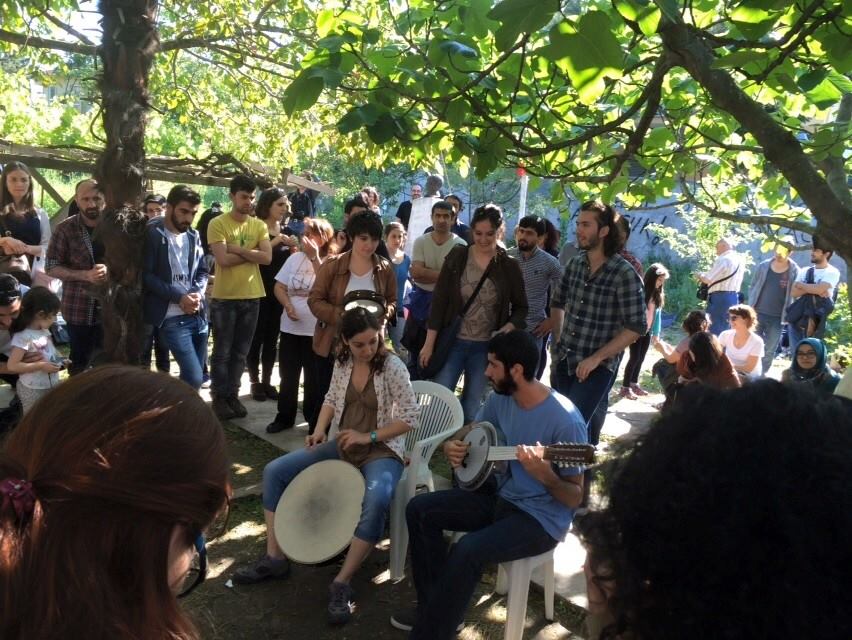
The Armenian Church has filed suit in Turkey for the return of church properties in historic Sis, now called Kozan, in Adana Province. In Istanbul, Nor Zartonk and human rights activists have been staging an occupation of the site of Kamp Armen, an Armenian orphanage and summer camp that was expropriated by the Turkish state, to save the buildings from demolition. The late Hrant Dink’s affiliation with the camp has aroused local sympathies and inspired Istanbul Armenians to take to the street in an unprecedented fashion.

Occupation of Kamp Armen

Next week I’ll be attending Book Expo America for the first time since I closed my foreign literary scouting business in 2000. I’ll be doing a book presentation on Wednesday, May 27 at the “Armenian Pavilion,” and on Thursday, May 28 I’ll be helping to staff the She Writes Press booth.

I’m looking towards June as a time when my life will calm down and I’ll get back to work on my Beirut novel. As part of that project, I’ve signed up for an elementary Arabic language class. In a month-long summer course, I’m not expecting to learn the language as much as to be in its presence. There is an Armenian saying, “You are as many people as the languages you know.” The research I do for my novels and the creation of the characters and their worlds enrich my life in manifold ways.


Nancy Kricorian

NYC