now

Fiction and Truth

bourjhammoud


The Financial Times recently published an excellent interview (done, of course, by email) with Italian writer Elana Ferrante. There are many insightful and inspiring lines in the piece, but among my favorites is this paragraph:

I grew up in a world where it seemed normal that men (fathers, brothers, boyfriends) had the right to hit you in order to correct you, to teach you how to be a woman, ultimately for your own good. Luckily today much has changed but I still think the men who can really be trusted are a minority. Maybe this is because the milieu that shaped me was backward. Or maybe (and this is what I tend to believe) it’s because male power, whether violently or delicately imposed, is still bent on subordinating us. Too many women are humiliated every day and not just on a symbolic level. And, in the real world, too many are punished, even with death, for their insubordination.

As a novelist, I also felt a shock of pleasure and recognition in this sentence from the Ferrante interview: I have not chosen an autobiographical path, nor will I choose it in the future, because I am convinced that fiction, when it works, is more charged with truth. And Ferrante is not alone in this conviction. Doris Lessing once said, “Novels give you the matrix of emotions, give you the flavour of a time in a way formal history cannot.”

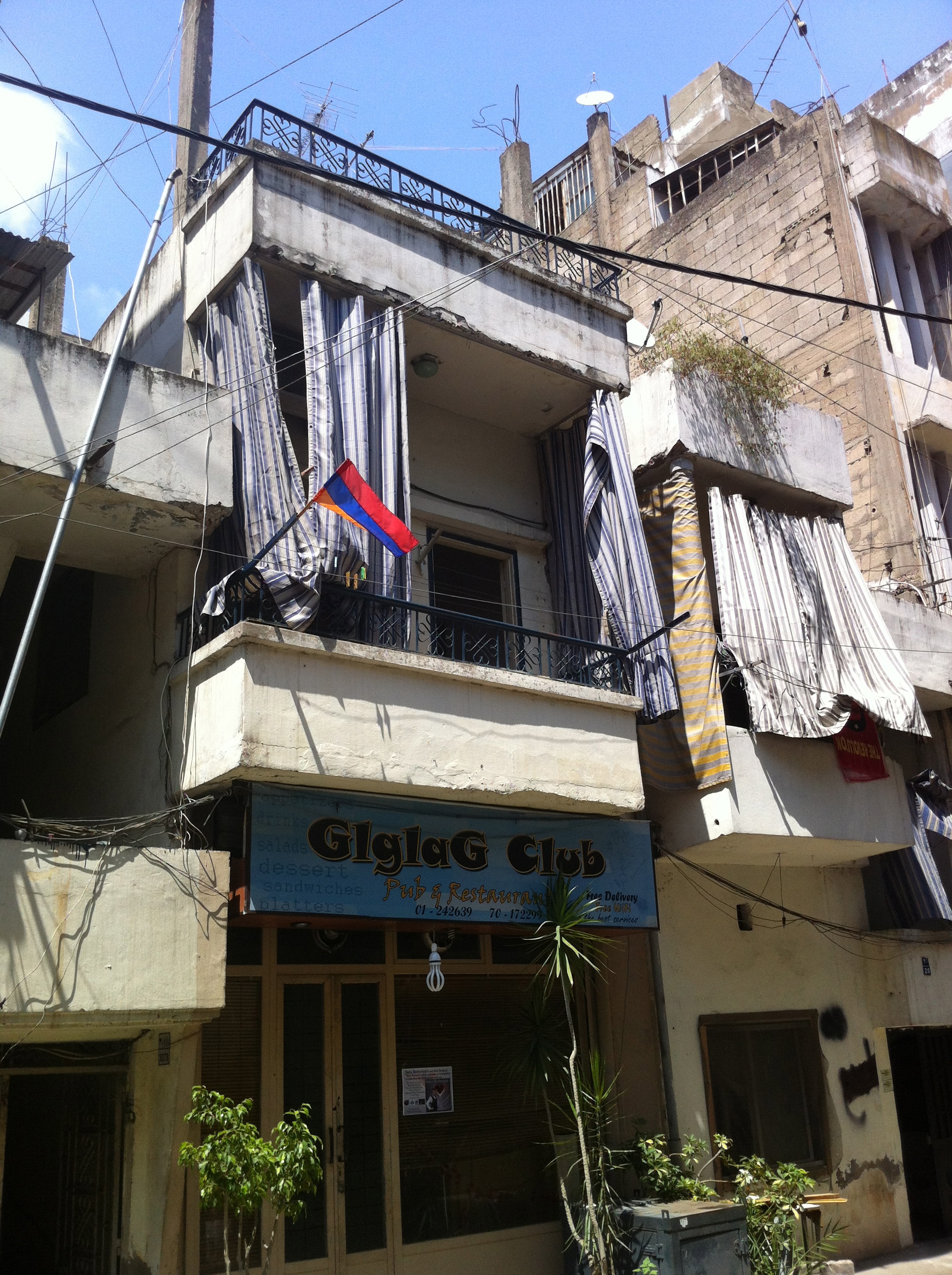
As I’m working on my new novel about Armenians in Beirut during the Lebanese Civil War, I’m engaged in my typical obsessive research. This is my painstaking path to historical, psychological, and fictional truth. (I once wrote a short talk about my goals in this regard.) People keep asking, how is the novel going? And in truth I haven’t started writing. I’m still in that phase of research and design where I am building the world in my head. Before my characters can inhabit it, I have to fully furnish it. It also feels as though I’m working on a big, complicated jigsaw puzzle. I now have all the edges done, and am piecing together the interior. Then the writing can begin.


Nancy Kricorian

New York City


On Pandering and Whiteness

BG-Banner-Essay-by-Watkins


Critiques of the whiteness and manliness of mainstream American literary culture have again been winging around the Internet in the past few weeks. Witness Rebecca Solnit’s tongue-in-cheek response to Esquire’s “The 80 Best Books Every Man Should Read.” Solnit’s piece, entitled 80 Books No Woman Should Ever Read, is full of funny zingers. My favorite is, “Ernest Hemingway is also in my no-read zone, because if you get the model for your art from Gertrude Stein you shouldn’t be a homophobic antisemitic misogynist, and because shooting large animals should never be equated with masculinity.”

In response to Solnit, Sigal Samuel penned, “What Women Can Learn from Reading Sexist Male Writers.” Samuel argues, “If reading sexist male writers is recommended for women readers, it’s downright compulsory for women writers. We need to be intimately aware of that language, need to speak it backward and forward, so that we can make our own books relevant and, ideally, cleverly subversive to boot.”

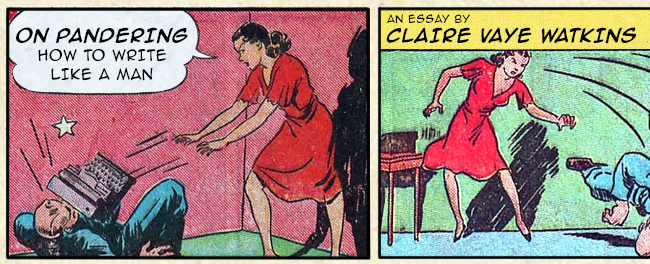
An essay in Tin House that also made a huge splash was by acclaimed young fiction writer Claire Vaye Watkins. “On Pandering” starts off with a personal anecdote about an extremely entitled male writer who visited the campus where she was teaching and complained in a blog post that she had declined to let him share her bed. From there she discusses the way that her literary career has been shaped by watching and emulating “the boys.” She says:

I wanted to write something Cormac McCarthy would like, something Thomas Pynchon would come out of hiding to endorse, something David Foster Wallace would blurb from beyond the grave. I have been reenacting in my artmaking the undying pastime of my girlhood: watching boys, emulating them, trying to catch the attention of the ones who have no idea I exist.

The essay was well written and compelling, and I posted it to Twitter, writing,

“On Pandering” Every woman writer I know should read this essay. #feminism

My friend Randa Jarrar responded “Meh,” and I replied, “As a person who doesn’t pander but often feels marginal it was an affirmation of my choices.” We then had an interesting back and forth about the fact that as Randa put it, “Some white woman writer just realized what writers of color have known forever. And Tin White House published it.” A few other writers jumped into our conversation, which also included a discussion about whether Armenians and Arabs are white, and what “whiteness” is. It turns out that we weren’t the only ones having this kind of conversation, and Alison Herman on Flavorwire compiled some of the Tweets. And then this week a piece appeared on The Guardian in which Jamaican writer Marlon James is quoted as saying that writers of color are forced to pander to white women.

All of this made me think back on my last author newsletter in which I asked for suggestions about contemporary literary novels that deal with class inequality in America. The only recent work I could think of was Dan Woodrell’s WINTER’S BONE. I realized that my ideas about class were unconsciously restricted to “white” writers. For example, I didn’t think of Louise Erdrich’s bestselling THE ROUND HOUSE as a candidate because it was a “Native American novel” not a “class novel.” It appears that I’ve got to up my intersectionality game!


Nancy Kricorian

New York City


Baghdad, Beirut, and Paris

vosguerres

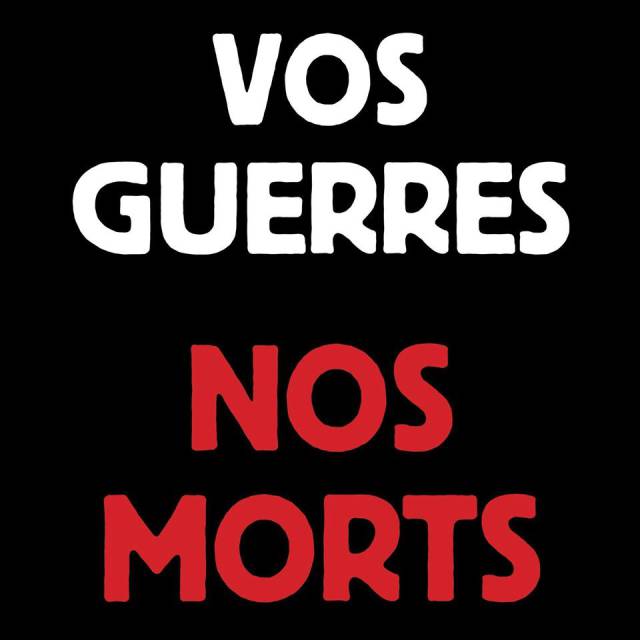
Your Wars, Our Dead


At the end of last week, we witnessed from afar horrific attacks that left scores dead and hundreds wounded in Beirut, Baghdad and Paris. These brutal and unconscionable strikes against civilians have been attributed to members of The Islamic State (ISIS), or Daesh (Da’ish).

Daesh is a loose acronym of the Arabic words that mean the same as ISIS: Al Dawla al-Islamyia fil Iraq wa’al Sham. According to The Guardian, the acronym is now an Arabic word in its own right, with its plural daw’aish meaning “bigots who impose their views on others.” The use of this name for the network of extremists who have been terrorizing people ranging from Yezidis in Northern Iraq to Parisians in the 11th Arrondissement robs them of any religious association. It is also a name that they reportedly hate.

But Daesh did not arise out of a vacuum. As Ben Norton cogently argues in his piece Our Terror Double Standard, we in the West must look to our own imperial state violence, including the disastrous, immoral, and illegal U.S. invasion of Iraq, as having created the chaos that allowed the spread of these “non-state” actors who now threaten indiscriminate violence from the Middle East to Europe.

When we mourn the terrible loss of life in Baghdad, Beirut and Paris, we must also mourn the deaths of those killed by the U.S. attack on a Doctors Without Borders hospital in Kunduz, Afghanistan, and by a Saudi-led coalition missile strike on a Yemeni wedding party, or by a month-long Israeli assault, using U.S. weapons and funded by U.S. tax dollars, on trapped civilians in Gaza. All lives are precious.

In response to the recent wave of violence stocks of leading weapons manufacturers have soared, and the U.S. has just sold another billion dollars worth of weapons to Saudi for their bombing campaign that is terrorizing civilians and destroying the architectural heritage of Yemen. And that is why rather than joining the rallying cries for revenge and more carnage, or the xenophobic and racist calls to bar Syrian refugees from our communities, we must redouble our efforts to put an end to these ruinous wars and occupations. As Mother Jones said, “Pray for the dead and fight like hell for the living.”


Nancy Kricorian

New York City


Neapolitan Pizza and Armenian Art


Silvina Der-Meguerditchian, Treasures, 2015


My Ferrante Fever has abated, but for those of you still in the throes of it, you might want to make Neapolitan pizza or the pistachio creampuffs mentioned in My Brilliant Friend. You might have missed this piece on The Neapolitan Novels as the “anti-epic Epic,” or this one from the Los Angeles Review of Books comparing them to Ta-Nehisi Coates’s Between the World and Me.

Now that I’ve left Naples behind, at least for the moment, I’m back in Beirut during the Lebanese Civil War. I’m currently reading B as in Beirut by Iman Humaydan Younes. One of the four women narrators says, “Men’s fingers stay on the triggers while women look for a safe place for their children.”

Sad to say this piece is the fruit of my final collaboration with Enas Fares Ghannam through the We Are Not Number project. She has a new mentor, and I will start with another young writer in January. But I’m thrilled for her–this is her first ‘official’ publication, and it’s a beautiful essay: “A Neighborhood Ripped Apart in Gaza.”

I’ve been enjoying my semester as Writer-in-Residence at the Kevorkian Center for Near Eastern Studies at New York University. The writing workshop has one more session to go, I did my outreach program presentation for high school teachers last week, and the public event is coming up on November 9th. For those of you in New York City, I hope you will join us on November 9th at the panel discussion entitled Art And Memory: Looking Back and Moving Forward on the Centennial of Armenian Genocide. “Art critic and Hyperallergic editor-in-chief Hrag Vartanian will moderate a conversation about art making, identity, and memory with visual artist Silvina Der-Meguerditchian, photographer Diana Markosian, and novelist Nancy Kricorian.” There will be an associated exhibit of works by Silvina and Diana that will be on display at The Kevorkian Center from November 9th until February 5th.

For the 30th Anniversary celebration of the New York Foundation for the Arts’ Artists Fellowship Program, my novels will be on display as part of Stacks: Three Decades of Writing Fellows with an Installation by Anne Munges. I’ll be at the opening on November 13th, and if you’re in the city, I hope you’ll stop by.

And finally, here is a video by the Lebanese alternative rock band Mashrou’ Leila. It took some work and the help of friends, but James and I managed to snag two tickets to their sold-out show at Le Poisson Rouge on Saturday, October 31. Now that will be some fun.


This is the late October issue of my author newsletter. If you’d like to be added to the distribution list, send a note to nkbookgroup@gmail.com.


Nancy Kricorian

New York City


Ferrante Fever (2)

The Neapolitan Novels by Elena Ferrante


Coincident with the September 1st launch of the fourth and final installment of Elena Ferrante’s NEAPOLITAN NOVEL (if you haven’t read them yet, I recommend that you do so immediately), a flurry of reviews, articles and interviews were published. For those of you new to Ferrante, she is an Italian novelist who writes under a pen name and refuses to give in-person interviews or to do public readings, book signings or any other of the promotional work required of authors. (She is NOT on Facebook or Twitter either.)

There was an excellent interview in VANITY FAIR Magazine that started by describing the literary wars going on in Brooklyn: Karl Ove Knausgaard versus Elena Ferrante. Knausgaard is a Norwegian writer who produced a six-volume autobiographical novel entitled MY STRUGGLE. I asked a clerk at the cash register of Book Culture, our local independent bookseller, if there had been arguments among staff about the merits of the two authors—both of them having written recent much praised bestselling multi-volume autobiographical novels. Yes, she told me, each of the authors had passionate champions. I asked, “Does it break down along gender lines?” She said, “No.” But the woman behind the next register said, “Are you kidding? The women prefer Ferrante, and the men swear by Knausgaard.”

Having read all of Ferrante’s novels now available in English, and having made it through two and one half books of Knausgaard’s MY STRUGGLE, I know where my loyalties lie, although I do admire both works.

The London Review Bookshop posted on their blog a letter Ferrante wrote to her publisher before the launch of her first novel in 1991. Her words on book promotion were bracing and funny:

“I do not intend to do anything for TROUBLING LOVE, anything that might involve the public engagement of me personally. I’ve already done enough for this long story: I wrote it. If the book is worth anything, that should be sufficient. I won’t participate in discussions and conferences, if I’m invited. I won’t go and accept prizes, if any are awarded to me. I will never promote the book, especially on television, not in Italy or, as the case may be, abroad. I will be interviewed only in writing, but I would prefer to limit even that to the indispensable minimum.”

Slate published a short piece about the publisher’s decision to use “low-class” images on Ferrante’s novels, and the author’s acquiescence in this decision. The Economist ran a piece about how “a four-volume feminist novel has become an unlikely global hit.” The Atlantic published an interview with Ferrante’s American translator. And then cap it all off and prove how mainstream #FerranteFever had become, Entertainment Weekly ran an interview with the writer.

I won’t catalogue the many ecstatic reviews (you can look those up yourself), but after reading the novels, you might want to visit Ischia, an island off Naples where the novel’s narrator and heroine Elena spends time in the summer, and you might want to check out a travel piece about the place from The Guardian (with requisite quotations from the books). I’m dreaming of a trip to Naples, and hope by the time I get there an entrepreneurial guide will have a devised a walking tour of Ferrante’s City.

At this point, I have over a dozen friends and family members who have read and loved MY BRILLIANT FRIEND and the other books in the series. I’m thinking of hosting a #FerranteFever dinner in a few weeks after everyone has finished book four so we can discuss the puzzling, maddening and probably brilliant ending (don’t worry—no spoilers here!).


Nancy Kricorian

New York City