now

Raise Your Pen For Freedom

My contribution to the #RaiseYourPenForFreedom social media campaign


Last year at this time I was in Istanbul for Armenian Genocide Centennial commemorative events. It was a sad milestone, but it was also a time that was full of hope. Our Project 2015 organizing team and almost two hundred participants had flown in from New York, Los Angeles, Paris, Yerevan, Beirut, and other cities. My experiences in Istanbul that week were so inspiring that I was fully planning to return the following year, thinking that I would even go to Diarbakir, the de facto capital of Turkey’s Kurdish region, for the 101st anniversary of the genocide on April 24, 2016.

Last April my friends in Istanbul—Turks, Armenians, Kurds, and ex-pat Americans—were excited about the prospects for the upcoming elections in June 2015. They were supporting HDP (the People’s Democratic Party, a left-wing and anti-nationalist coalition), many of them electioneering for the party and all of them hoping that it would cross the 10% threshold for entering the Turkish parliament. There was jubilation when they succeeded.

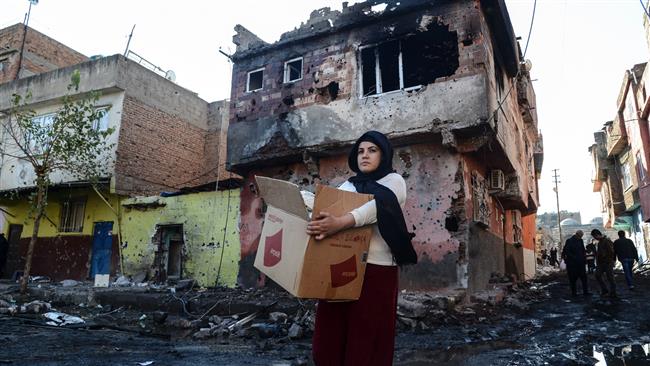
Fast-forward to a year later and the situation in Turkey is worse than I could have imagined possible. Erdogan’s failure to win the super majority he needed to change the constitution and to consolidate his presidential power led him to reignite the war against the Kurds. Kurdish towns and cities were placed under military sieges with round-the-clock curfews lasting for weeks and months. The district of Sur in Diyarbakir, where the recently restored Sourp Giragos Armenian Church is located and where I visited in June 2014, is now a blasted-out war zone under threat of an “urban renewal” project that is a combination of a construction boondoggle for Erdogan’s cronies and a “cleansing” program aimed at the PPK (The Kurdistan Workers Party), but also at poor and working class Kurds. The church itself has been slated for expropriation by the government.

Turkish nationalists inside and outside the government whipped up anti-Kurdish sentiment, accusing anyone who criticized the war on Kurdish cities and towns of supporting terrorism. Once again rumors spread purporting that members of the PKK were actually Armenians, those perennial traitors to the Turkish state.

Added to all this, there have been a number of bombing attacks, two claimed by ISIS in Istanbul tourist districts, one in Suruc, and one in Ankara attributed to an offshoot of the PKK. The Turkish government continues to play a double game with regard to the Syrian war, seeing the Kurdish YPG militants in Northern Syria who are fighting ISIS under U.S. protection as a bigger threat than ISIS itself. (Admittedly all the political actors involved in the Syrian Civil War are playing double and even triple games.)

In January academics in Turkey signed and circulated a peace petition entitled “We Will Not Be Party to This Crime,” denouncing the renewed state violence in the Kurdish southeast. Within days, a witch-hunt had started against the professors and graduate students who had signed the letter, with twenty-seven of them temporarily detained, and dozens suspended and fired from their jobs. International professional associations and many academic institutions sent letters and petitions to the Turkish government decrying this crackdown on academic freedom and free speech. But in March three professors were arrested and charged with “Propagandizing for a Terrorist Organization.” This week the arrested academics will go on trial in Istanbul, and a call for a social media solidarity campaign has gone out under the hashtag #RaiseYourPenForFreedom.

I decided I wouldn’t be going back to Istanbul or Diyarbakir this April; instead I’m heading to Beirut on a research trip for my current fiction project. Turkey’s democracy has been on a downward trajectory this year—sad for me from afar, but devastating for the Kurdish communities that have been subjected to brutal military siege, and frightening for the academics and journalists who are threatened and harassed for their dissent. As HDP’s co-chair Selahattan Demirtas put it in his New York Times op-ed last week, “By ending the peace process with the P.K.K., by creating a repressive security state, by shelving the rule of law and by cracking down on free speech, he is drowning what is left of Turkey’s democracy — making this country more susceptible to radicalism and internal conflict than ever.”


Nancy Kricorian

New York City


Journey to Hope and Back


surafp

Diyarbakir’s Sur District after several months of military siege


In the space of eighteen months I traveled to Turkey three times—in June 2014 on an Armenian Heritage Trip throughout the country that I wrote about for Guernica; in September 2014 to Istanbul as part of Columbia University’s Women Mobilizing Memory Workshop; and again in April 2015 to Istanbul for events commemorating the Centennial of the Armenian Genocide.

For an Armenian in the post-genocide Diaspora, several generations removed from ancestral home places and collective trauma, going to Turkey was a fraught experience, but I forged important bonds in the land where my grandparents were born. Among other inspiring and moving experiences, I visited their hometowns, and I went to Sunday services at the newly restored Sour Giragos Armenian church in Kurdish Diyarbakir’s Sur District. While in mainstream society and the media I observed denial about exactly what happened to the Armenians in 1915, as well as a disturbing current of anti-Armenian “racism” (for want of a better word), I became friends with progressive Turkish and Kurdish artists and intellectuals. We talked openly about the Armenian Genocide, and I learned more about Turkey’s complicated internal politics and history. When I left Istanbul at the end of April 2015, I fully expected that I would return in 2016 to continue the relationships and work we had begun, and even imagined that I would be in Diyarbakir to commemorate the one-hundred-and-first anniversary of the genocide.

Many of my new friends campaigned for HDP (People’s Democratic Party), a progressive, multicultural and pro-Kurdish party, in the lead-up to the June 2015 elections. When HDP crossed the required 11% threshold for entrance to the parliament—and even surpassed it by taking 13% of the vote—there was much jubilation. This was for a short time a season of hope.

When Turkish President Erdogan and his AKP party did not achieve a parliamentary super-majority that would allow them to rewrite the Turkish constitution, the government reignited its war against the Kurds in the summer of 2015 and forced another round of elections in November. It is beyond the scope of this post to discuss the many dismal events since July 2015, or the complicated internal and external politics involving the civil war in Syria, a massive refugee crisis, and the double and triple games being playing by all political actors in the region. But brutal, months-long military sieges have reduced many Kurdish neighborhoods and towns in Turkey’s southeast to rubble. Several suicide bombings have strewn dozens of bodies across the streets of Ankara, Suruc, and Istanbul. Erdogan’s renewed war on the Kurds has turned into a war against a thousand academics who signed a peace petition. Things have now devolved so far that freedom of the press, academic freedom, and freedom of speech are under threat in Turkey.

My Turkish and Kurdish academic friends who signed the peace petition are awaiting arrest and fear an imminent travel ban. And the neighborhood where Sourp Giragos is situated—where I had hoped to be on 24 April 2016—has become a bombed-out war zone.

In this dire situation, I look back on last year’s hopeful connections and realize that now, more than ever, the work of commemorating and recognizing the Armenian Genocide of 100 years ago is and must be intimately bound up with the ongoing struggle for justice for the Kurds and the fight for civil and human rights for all who live in Turkey.


UPDATE: The day after I wrote this, there was a deadly bombing attack on Istanbul’s popular Istiklal Avenue pedestrian shopping district. This is the same street on which we gathered with thousands of people in front of the French Consulate on 24 April 2015 for a solemn commemoration of the Centennial of the Armenian Genocide. (19 March 2016)

Nancy Kricorian

New York, NY


An Armenian-American Translated Into Arabic

Nancy page


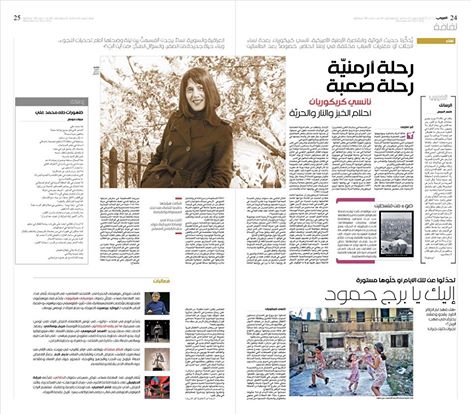
This week, because of the interest and good offices of my friend poet and editor Najwan Darwish, Al Araby in London published an interview I did with Elise Aghazarian. I met Elise and her family in Jerusalem and Ramallah during the 2010 Palestine Festival of Literature. Elise also translated my short prose piece “Homage to Bourj Hammoud.” (The English version can be found here.) I wish that I could read Arabic, but I have heard from friends that Elise did a beautiful job with both the interview and the translation. I love the photo of children playing in Sanjak Camp that she chose to illustrate the Bourj Hammoud piece.

Nancy Kricorian

New York City


Deeply, Madly, Incontrovertibly

Screen Shot 2016-02-05 at 2.04.03 PM


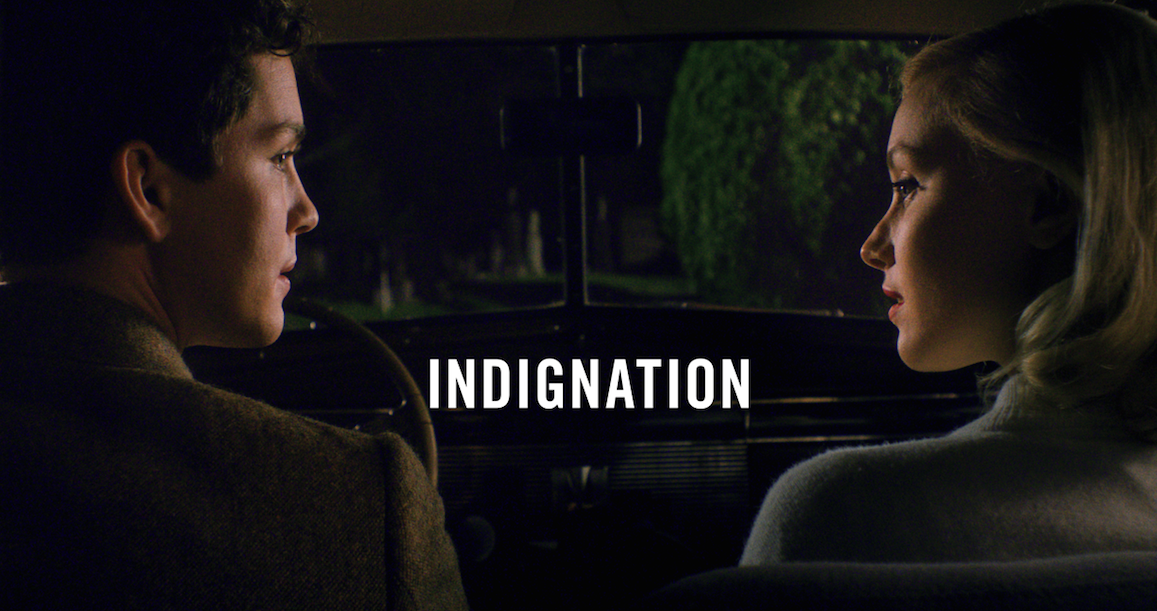
Some years ago at a regional film festival, a member of the festival’s board (who was also the wife of a media executive) approached me and said, “Congratulations!” I was puzzled. Had she somehow heard about the sale of my new novel? When she added, “You must be so proud of James,” I realized she was congratulating me on the fact that my husband was being awarded the festival’s screenwriting prize. When these kinds of felicitations for my spouse’s successes came my way again I was no longer confused, but I was mildly annoyed. I had my own accomplishments and didn’t feel it necessary to take credit for his, although I was indeed proud of him. But when INDIGNATION premiered at Sundance last month, I was more than ready to accept the congratulations. I had been involved with James’s directorial debut every step of the way, and had made every kind of investment—literal and figurative—that one could make. I also love and admire the film—deeply, madly, and incontrovertibly. (And I’m a tough critic, having once told my elder daughter that she was the second-best actor in the 4th grade production of Romeo and Juliet.)

The world premiere screening of INDIGNATION at the Sundance Film Festival sold out and the film won over the audience. It was delightful when everyone broke into spontaneous applause at the end of my favorite scene in the film. The Hollywood Reporter gave the film an intelligent RAVE and did a short video interview with James, and actors Logan Lerman, Sarah Gadon, and Tracey Letts. Lionsgate bought the North American distribution rights hours after the screening, which means the film will be coming to a theater near you later this year at a yet-to-be-determined date. And FilmNation has sold distribution rights around the globe—tell your overseas friends to look out for it. INDIGNATION’S European premiere is scheduled for February 14 at the Berlin Film Festival. I call that the best Valentine’s Day gift ever.


Nancy Kricorian

New York City


Turkey’s Renewed War on the Kurds

surrre

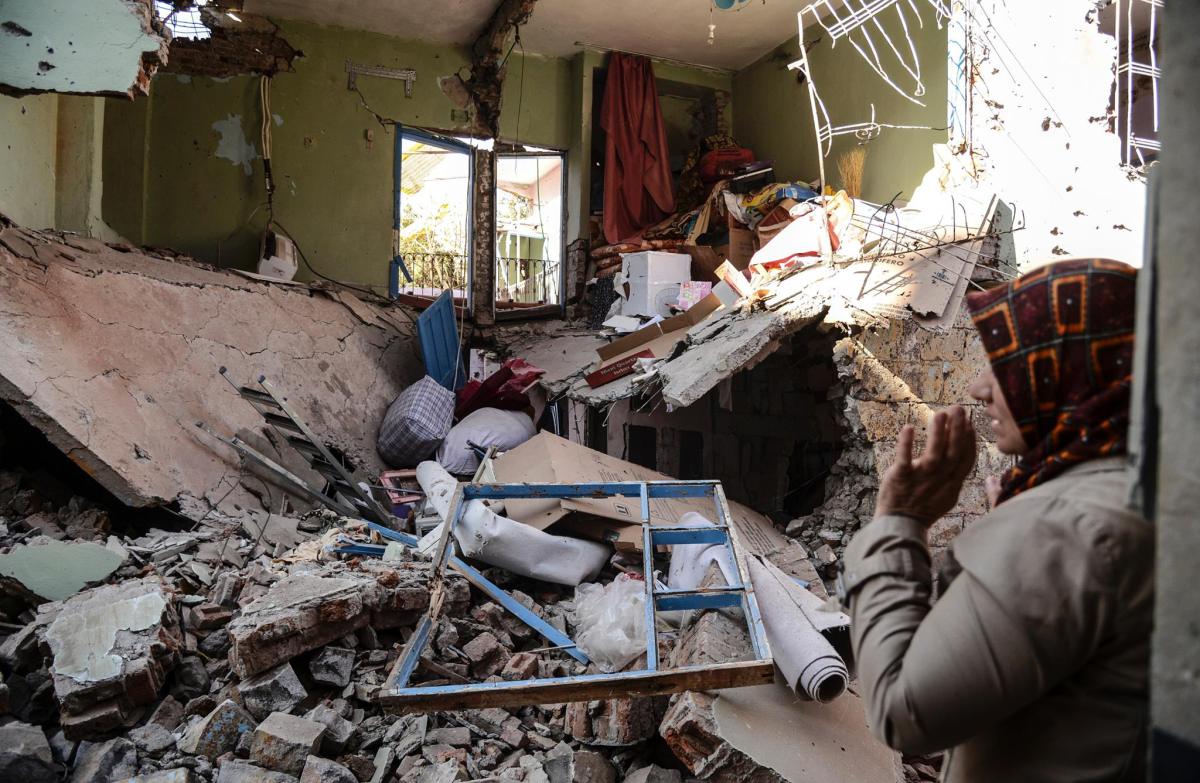
Diyarbakir’s Sur District during curfew


Since Erdoğan’s AKP lost its super-majority in the June 2015 elections, when the progressive, pro-Kurdish HDP party crossed the 10% threshold to be seated in Parliament, the situation in Turkey’s Kurdish region has deteriorated. The peace process that had been initiated in 2013 is now in shambles. Noam Chomsky described it thus: ‘The responsibility for the present self-inflicted crisis in the country must lie squarely with Erdoğan, who perceives the Kurds—whether it is the HDP [the pro-Kurdish, left-leaning party which gained 81 seats at the last election], the PYD in Syria or the PKK [the separatist Kurdish Workers’ Party]—as obstacles to his plan to establish supreme rule for the Turkish presidency.’


It is beyond my expertise and the scope of this post to analyze the complicated underlying political maneuvering that gave rise to the new round of violence—with many of the involved political actors playing double and triple games. My focus here is on the way that the Turkish government’s renewed war against the PKK has had a terrible impact on civilians in the Kurdish regions of Turkey.


The Turkish government has mobilized its war machine in Kurdish cities, towns and villages, resulting in great suffering in the civilian population in these places. They have also arrested a number of local HDP officials and parliamentarians, accusing them of being members of the once-again demonized PKK.


A Turkish friend sent this update last week:


We receive the news of civilians, politicians, children, elderly people dying under horrifying attacks and tortures (not to mention the armed people who are involved in the fight). More than half of the country prefers to ignore, or to believe in the news reports that are provided by the government. Some want to believe that the armed forces of the state would only commit such violence to protect the unity of the country. The rest of the people are suppressed, and begin to feel almost helpless. We keep signing petitions, posting things on social media, and the ones who support the peace loudly, get arrested, tortured, or just like the human rights defender, Kurdish lawyer and the chairman of Diyarbakır Bar Association Tahir Elci, get killed.  


There’s a systematic and organized killing of a particular group, the Kurdish people, right in front of our eyes, and we see hundreds of them being forcibly displaced by the state. We hear that they cannot collect the dead bodies of their mothers, or their children from the street, while they lie there for ten days, rotting right before their eyes, in front of their windows. They cannot go out to retrieve the dead bodies due to the bombardment and the snipers. We hear of a grandfather getting killed on the way to the hospital, while carrying a white flag in one hand and in the other hand a three-month old baby who was hit when their house was shelled. We hear about a father seeing his son’s eye carved out when he finds him at the mortuary. It has become a horror story, and I am afraid, we are not well organized enough to come together, understand what is happening and stop this crime. Most people are helplessly waiting for it to end by itself. An artist friend in Diyarbakir, with whom I am in correspondence every day, said, ‘Everything will become ‘normal’ again, once there are enough people who have been killed.’


The Human Rights Foundation of Turkey recently issued a fact sheet outlining the devastating effects of recently imposed curfews, with accompanying military actions. The report states:


Since 16 August 2015, there have been 58 officially confirmed, open-ended and round-the-clock curfews in at least 19 districts of 7 cities (primarily Diyarbakır, Şırnak, Mardin and Hakkâri) where approximately 1 million 377 thousand people reside (according to the 2014 population census). During these officially declared curfews, fundamental rights of people such as Right to Life and Right to Health have been violated and 162 civilians (29 women, 32 children, 24 people over the age 60) lost their lives according to the data of HRFT Documentation Center.


In response to the violence and to the suffering of Kurdish civilians, a group of Turkish academics initiated a petition entitled “We Will Not Be Party to this Crime.” The text, which you can read in full here, summarizes what the authors see as Turkey’s human rights violations against its citizens in the Kurdish region. (The petition web site has been hacked by right-wing Turkish nationalists multiple times; if you cannot access it at the link above try this one.)


The Turkish state has effectively condemned its citizens in Sur, Silvan, Nusaybin, Cizre, Silopi, and many other towns and neighborhoods in the Kurdish provinces to hunger through its use of curfews that have been ongoing for weeks. It has attacked these settlements with heavy weapons and equipment that would only be mobilized in wartime. As a result, the right to life, liberty, and security, and in particular the prohibition of torture and ill treatment protected by the constitution and international conventions have been violated. 


The petition concludes:


We, as academics and researchers working on and/or in Turkey, declare that we will not be a party to this massacre by remaining silent and demand an immediate end to the violence perpetrated by the state. We will continue advocacy with political parties, the parliament, and international public opinion until our demands are met.


In response to the petition, which has garnered over 1,400 signatures, including the names of many international academic celebrities including Noam Chomsky and Judith Butler, Erdoğan has called the signers in Turkey “traitors,” saying, ““You are either on the side of the state or of the terror organization and terrorists.” The Turkish Council of Education has suggested it might take legal action against the professors who have signed the petition, and the inflammatory rhetoric dropped to a new low when a notorious gangster threatened violence against academics calling for peace negotiations.


In the face of this brutality and repression, it is important that the international community spread awareness about what is happening in the Kurdish region and in Turkey. If you would like to take action, you can sign this petition from Amnesty calling for an end to Turkey’s arbitrary restrictions on movement. If you are an academic or a graduate student, you can add your name to “We Will Not Be Party to This Crime” by sending an email with your name and institutional affiliation to info@barisicinakademisyenler.net. Journalists, writers, and students in Turkey have issued statements in support of the scholars, and you can find these and other updates on the Bianet site.


There is an old Kurdish proverb that says “Kurds have no friends but the mountains.” Now is a good time to show that people who care about justice care about the Kurds.


Update: The day after this was posted, 21 academics in Turkey who had signed the petition “We Will Not Be Party to This Crime” were detained by Turkish police. 

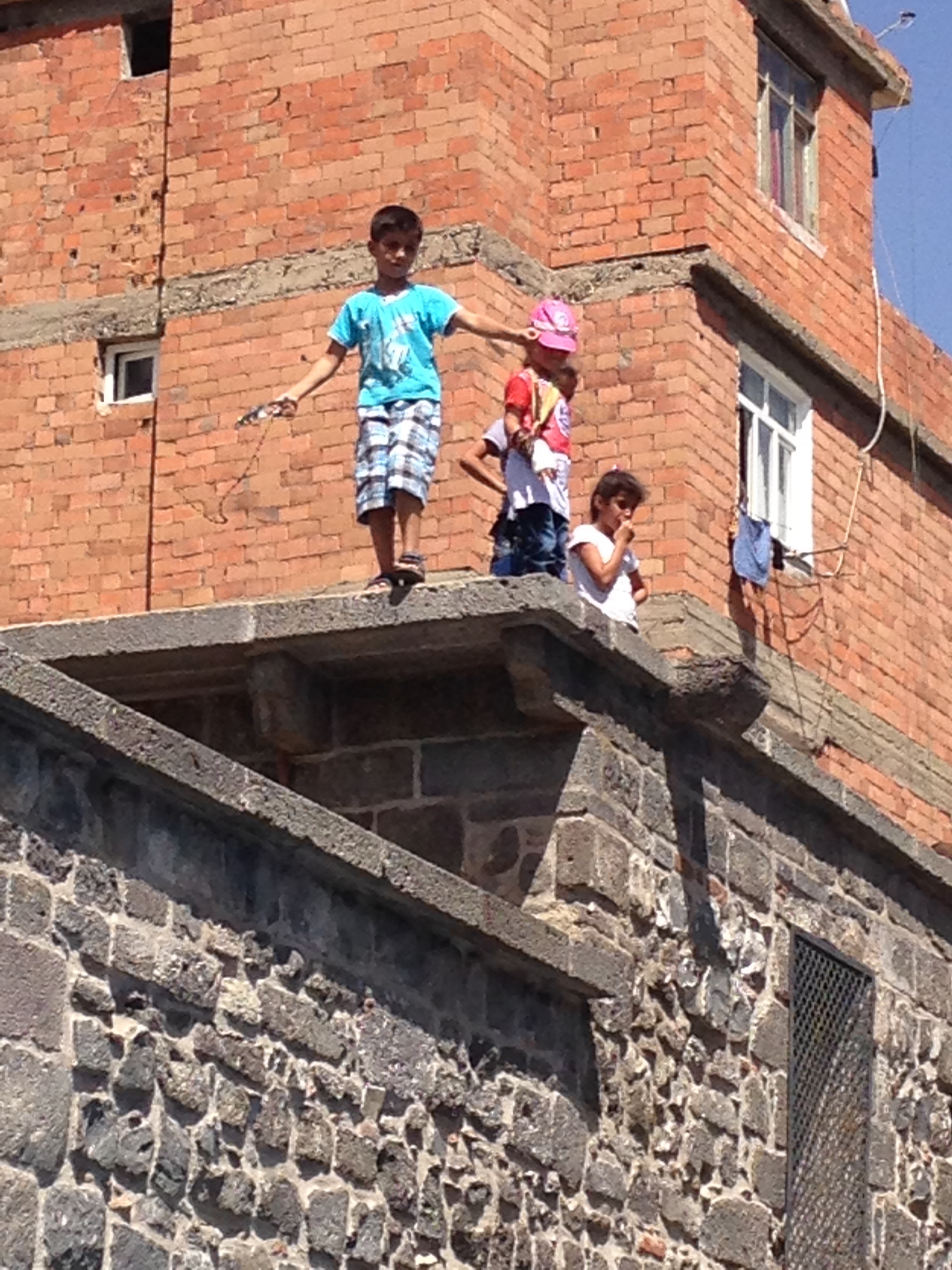
kidsinsur

Kurdish children playing on rooftop in Diyarbakir’s Sur District. (Photo by Nancy Kricorian)


Nancy Kricorian

New York City